
just parabraph
The human brain
… is often called the most complex structure in the known universe. For decades, it stood alone in its ability to reason, create, and learn. Today, a new contender has emerged: Artificial Intelligence (AI).
. . . . .
While AI can process millions of data points in seconds, it still struggles with tasks a human toddler handles effortlessly. To understand how close we are to creating true machine intelligence, we must compare the ultimate product of biological evolution with our most advanced technological creation.
just parabraph
heading
AI vs Human
heading
just parabraph
Architecture and Anatomy: Silicon vs. Carbon
The fundamental difference between AI and the human brain lies in their physical blueprints and how they process information.
- The Human Brain (Biological Hardware): The brain is an organic, massively parallel system powered by roughly 86 billion neurons connected by trillions of synapses. It is a wetware system that relies on biochemical signals and neurotransmitters. Information processing and memory storage happen in the exact same place—the connections between neurons.
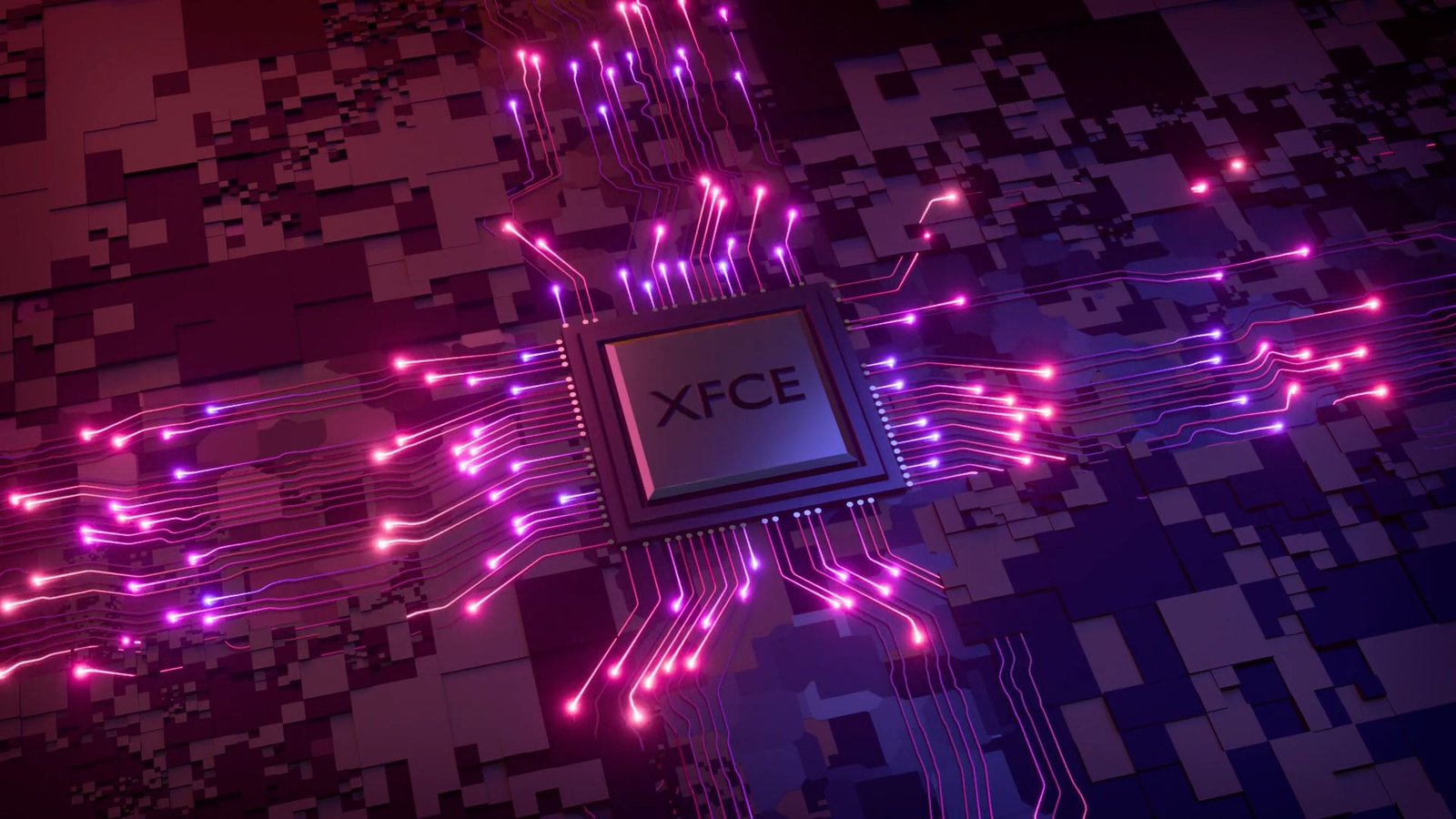
- Artificial Intelligence (Digital Software): Modern AI, specifically Deep Learning, utilizes Artificial Neural Networks (ANNs). These are mathematical models inspired by the brain but run on silicon chips (CPUs and GPUs). Unlike the brain, traditional computer architecture separates the processor (which does the thinking) from the memory (which stores the data), creating a structural bottleneck.
Direct Comparison: Brain vs. AI
| Feature | The Human Brain | Artificial Intelligence (AI) |
|---|---|---|
| Power Source | Bio-chemical (Glucose/Food) | Electrical Grid |
| Energy Consumption | Highly Efficient (~20 Watts) | Highly Inefficient (Megawatts for large data centers) |
| Processing Speed | Slow individual signals (~100 Hz), but massive parallel processing | Ultra-fast individual operations (Gigahertz), but limited true parallel integration |
| Learning Style | Few-shot learning (Can learn from a single experience) | Massive data requirement (Needs millions of examples to generalize) |
| Adaptability | High (Neuroplasticity allows self-rewiring) | Low (Requires retraining or fine-tuning by humans) |
just parabraph
Cognitive Capabilities: Where They Excel
1. Processing Speed and Data Handling
- AI Wins: When it comes to raw calculation, pattern recognition in massive datasets, and speed, AI leaves humans far behind. An AI can scan millions of medical images for cancer cells or analyze global financial markets in the blink of an eye.
- The Brain’s Limit: Humans are sequential thinkers. We process data slowly and are easily overwhelmed by sheer numbers.
2. Efficiency and Energy
- The Brain Wins: The human brain is a marvel of evolutionary engineering. It performs unimaginable cognitive feats while consuming about 20 watts of power—roughly the same as a dim lightbulb.
- AI’s Limit: Training a single large language model requires massive data centers containing thousands of specialized chips, consuming as much electricity as a small town.
3. Learning and Generalization
- The Brain Wins: Humans possess General Intelligence. A child sees a single cartoon drawing of an elephant and can instantly recognize a real elephant at the zoo, a sculpture of an elephant, or a shadow puppet. We seamlessly transfer knowledge from one domain (like playing chess) to another (like strategic business planning).
- AI’s Limit: AI exhibits Narrow Intelligence. An AI trained to play chess at a grandmaster level cannot use that knowledge to checkers, drive a car, or write a poem without being entirely reprogrammed or fine-tuned.
just parabraph
The Uncharted Waters: Consciousness and Emotion
The most profound divide between the two is not computational—it is experiential.
- Context and Common Sense: Humans possess an intuitive understanding of physics, social norms, and “common sense” built from living in a physical body. AI doesn’t understand the world; it understands statistical probabilities of data. If an AI writes a beautiful poem about grief, it doesn’t feel sad; it simply knows which words statistically follow one another based on its training data.
- Consciousness: The human brain generates subjective experience (qualia)—the feeling of the warmth of the sun, the sting of betrayal, or the spark of genuine inspiration. AI is completely unconscious. It simulates outputs based on inputs but lacks an inner life.
just parabraph
Conclusion: Collaboration over Competition
AI and the human brain operate on entirely different paradigms. AI is a tool of hyper-specialization, excel-level calculation, and tireless data processing. The human brain is a masterpiece of energy efficiency, emotional depth, holistic understanding, and creative adaptability.
Rather than looking at AI as a replacement for the human mind, the future lies in symbiosis. By pairing the emotional intelligence, ethical reasoning, and conceptual leaps of the human brain with the flawless memory and speed of AI, humanity can unlock solutions to problems that neither could solve alone.
Would you like me to expand this article by focusing on a specific angle, such as how AI learns compared to human memory, or the future of neuromorphic computing (chips built to mimic the brain)?
just parabraph